


Japan had been on our bucket list for years. We even considered it for our honeymoon, but with so much to explore, we knew we needed longer than a two-week holiday. Armed with an itinerary meticulously curated by InsideJapan—spanning neon-lit cities to serene mountain valleys—we set off to write our own story across the Land of the Rising Sun.
InsideJapan’s Info-Pack became our constant companion, answering almost every question and ensuring we didn’t miss a beat. From historic temples and tranquil gardens to wild mountain hikes and bustling markets, we finished the trip with hearts full of memories and a deeper understanding of ourselves.
Toyko Unveiled—From Ancient Temples to Modern Marvels
Our journey began in Tokyo, staying in Asakusa with the spectacular Senso-ji Temple just minutes away. Arriving late, we were delighted by all the things we’d heard about Japanese hotels: complimentary toothbrushes, hairbrushes, razors—even pyjamas. And the toilets are on another level.
A half-day tour with our “Insider” guide, Kinga, gave us a taste of local life. She shared quirky stories, explained shrine and temple rituals, whisked us away from the crowds to Ueno Park, and took us to a lovely wee vegetarian restaurant for Lee Ann’s birthday lunch. Fighting off jet lag, we ended the day with beers in the Asahi Tower as the skyline lit up.
The next few days were packed:
• TeamLab Planets (an absolute must)
• A micro pig café (cute until they squealed and fought)
• Crossing the infamous Shibuya Scramble (just a busy crossing—overhyped)
• An authentic sushi experience (not to Lee Ann’s taste!)
• A drink in a tiny Golden Gai izakaya
Each night, we returned to our hotel, made good use of the coin laundry, and I became obsessed with the TV channel showing the status of the guest washing machines. Game changer!


If You Go: Tokyo
- TeamLab Planets: Book early, it will sell out (limited food options but the vegan ramen is delicious.
- Getting around: Stay near a major transit line; Tokyo travel time adds up fast.
- Pack super light: Hotel amenity bars + coin operated laundry means you really don't have to take much stuff.
Toyama & The Alpine Route—From City Lights to Mountain Heights
Leaving Tokyo, we effortlessly navigated hectic Tokyo Station, grabbed our first kombini lunch, and boarded the Shinkansen to Toyama. Clean, quiet, efficient—everything so precise, from platform markings to queuing systems.
As a seaside town, Toyama is renowned for seafood. We used our tourist travel passes to visit the port area in search of local delicacies, but ended up in a brewery eating wedges and pickles after misjudging opening times. (All the seafood restaurants had closed.)
Next was the Tateyama Kurobe Alpine Route—perfect for lovers of the outdoors, with cable cars, funiculars, and buses weaving through jaw-dropping mountain scenery. We took advantage of Japan’s luggage-forwarding service, sending our big bags ahead to Nagano and travelling light.
Our first stop, the Midagahara Hotel, was completely shrouded in fog—probably a blessing, as it’s not the prettiest building (a surprisingly common theme in Japan). That evening we had our first kaiseki meal and were pretty clueless about what we were eating. We were the only Westerners there, and with limited English spoken, it felt like a truly authentic Japanese Alps experience. The menu was printed in kanji on beautiful paper, now kept as a memento of our first wedding anniversary.
Thankfully, the weather lifted by mid-morning, revealing the stunning wetlands and our first proper glimpse of the Japanese Alps. We took a short bus to Murodo, marvelling at the giant pond and steam rising from the crater, eyeing up the peaks we intended to climb.
Next was the Tengudaira Mountain Lodge, basic but comfortable, with more kaiseki meals and sunsets above the clouds – just wow! We summited Mt Obama and Mt Oonanjiyama, fuelled by our first bento box—eating lunch atop a mountain with chopsticks was a new experience. The views across the caldera and full mountain range were incredible. We even participated in a Shinto ritual for good luck and health. As two of the few Westerners, we perfected our konnichiwa and arigatou gozaimasu, and admired the well-organised two-way hiking system.
The remainder of the Alpine Route took us through mountains by bus, across the gorge by ropeway, and finally to Nagano.


If You Go: Toyama & The Alpine Route
- Trading hours: Check opening times religiously. Many restaurants close mid-afternoon.
- Luggage forwarding: We loved this service! Ask hotel staff to help with the paper work.
- Mountain dining: Expect full kaiseki dinners & embrace the unknown dishes. If you're veggie or vegan expect A LOT of tofu.
- Weather: Mountain weather is unpredictable, pack layers & be flexible.
Nagano & Matsumoto—Oyaki, Castles, and Soba Noodles
Nagano became an unexpected favourite. It absolutely poured—biblical rain—but after our first 7-Eleven breakfast (the legendary egg sandwiches live up to the hype), we headed to Foret Coffee, a Lonely Planet tip, for exceptional coffee and shelter.
We explored Zenkoji Temple, tried making oyaki, then relaxed in a public onsen. You quickly get used to bathing naked with strangers! We ended the day with soba noodles—still haven’t mastered the local slurping technique.
A short train ride brought us to Matsumoto. The city’s “Black Crow” castle is stunning, and the Yayoi Kusama exhibition was a surprise highlight. One of our best meals of the trip was at Goan Alps—a tiny restaurant where you watch your meal being prepared.


If You Go: Nagano
- Try a cookery class: We loved learning to make oyaki. They were delicious and provded a rare opportunity to interact with the local people.
- Onsen etiquette: Make sure you familiarise yourself with this before going. Most places dont allow tattoos to be on show.
Into the Alps—Kamikochi, Hiking, and Mountain Lodges
Kamikochi was one of the main reasons we wanted to visit Japan, and it didn’t disappoint: crystal rivers, wild macaques, and the freshest mountain air. We hiked to the summit of Mt Yakedake, climbing various ladders and trying not to inhale too much sulphur from the live volcano. Without a bento from our hotel, we survived on rice cakes and a mini peanut butter we’d been carrying since Canada. Proper mountaineers.
We also completed the 32km Karasawa Cirque hike with 800m elevation gain, staying overnight at the rustic Karasawa Hutte. Mountain safety is taken VERY seriously in Japan. At the checkpoint at Yokoo we had to submit a detailed hiking plan and confirm we had the correct gear.
We arrived at the hut by late afternoon. As the temperature dropped and darkness fell, the tents in the campsite started to glow we were mesmerised by the experience. We joined our fellow hikers for a simple but tasty meal before getting ready for bed. Lights-out is at 9pm in the mountains—no issue for us and we survived the night despite the chorus of snoring and the minimal bedding.
Breakfast was at 5:10am, perfectly timed for sunrise and the glorious morgenröte, the first pink-orange glow on the mountain peaks. Absolutely breathtaking, even though the autumn leaves hadn’t yet arrived due to the warm summer.
The hike back included soba, ice cream, and coffee—much needed after a low-quality hut sleep.
Two nights at Nishiitoya Sanso followed—a traditional ryokan with futons and beautifully presented meals. It rained endlessly, so we played Scrabble over herbal tea and seaweed crisps.


If You Go: Kamikochi & the Japan Alps
- Book huts early: these fill up super fast. We enlisted InsideJapan's help as you need to phone & speak Japanese.
- Bring proper gear: Standards are high, be adequately prepared. You'll see many Japanese in brand new gear and often wearing helmets.
- Pack snacks: Bento boxes aren't always provided early enough.
Takayama, Shin-Hotaka & Shirakawago—Tradition in Wood & Stone
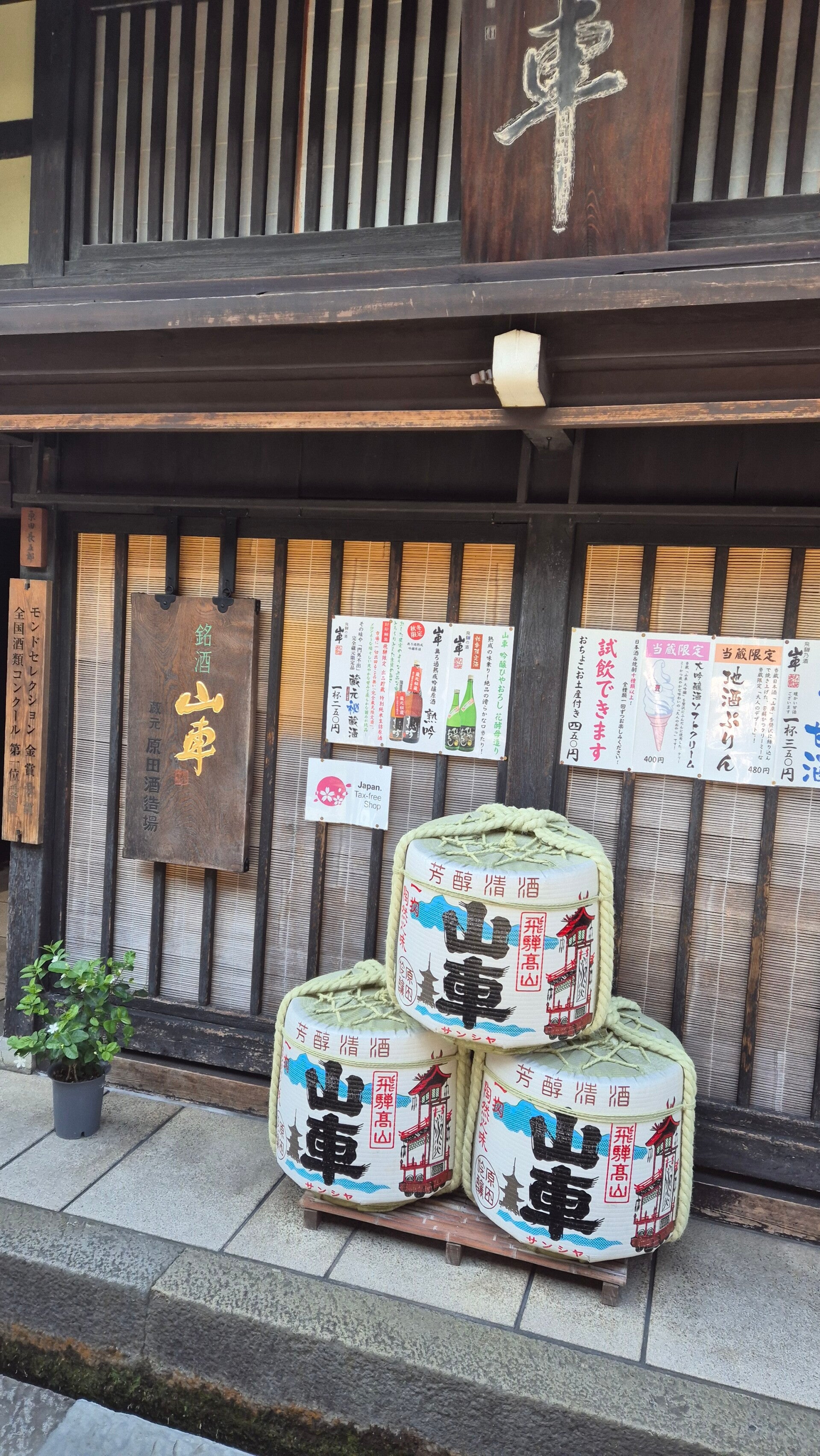
Takayama swept us into old Japan: morning markets by the river, giant apples, and hand-crafted souvenirs. Its preserved merchant houses earn it the nickname “Little Kyoto,” but we were still surprised by the number of Western tourists after so much time in the Alps. The Folk Village was a highlight—traditional houses, local crafts, a bit of origami, and failed stilt-walking attempts.
We felt we couldn’t leave without trying Hida beef. Even as non-meat-eaters, we appreciated the region’s pride in their produce but were happy to return to our veggies and tofu afterwards. I loved trying local weaving—therapeutic, and now a unique souvenir proudly attached to my backpack.
Onward to Shin-Hotaka Onsen via the famous Nohi bus, then a ride on the double decker ropeway to take us to the trailhead at 215o meters. After a snack break (I had to try a sweet potato and whipped cream sandwich with a cold canned coffee), we took hiked to Mt Nishinomarucho Doppoyo. We had to up the pace to catch the last ropeway down, but the hike was stunning, especially with the first autumn colours. A scramble at the top left me with wobbly legs—not ideal for the descent—but we made it with time to spare.
Our digs that night were… interesting. A very dated ryokan with a room resembling a doctor’s waiting area, but the onsen was lovely and dinner provided much entertainment with its unusual mystery dishes. The oddest was mushroom tea—literally a teapot filled with mushrooms and broth.
The next day, we returned to Takayama for a quick overnight before visiting Shirakawago. Our hotel stored our luggage so we could travel light.
Shirakawago’s Ootaya minshuku was a delight: a family-run 200-year-old thatched farmhouse. Communal meals around the irori hearth offered rustic home cooking and warm hospitality. The UNESCO village felt like a living postcard.
We enjoyed coffee and cake overlooking the village—tatami mats, matcha drinks, apple cheesecake, and total calm. These quiet moments are just as meaningful as the grand temples and big sights. And as it turns out, essential for our sanity & contentment.


If You Go: Takayama, Shin-Hotaka & Shirakawgo
- Try a craft workshop: There's lots to choose from, I loved the weaving.
- Stay overnight in Shirakawago: Many do this as a day trip. Stay in a tradtional minshuku for the full thatched roof experience.
Kanazawa & Kyoto—From Samurai Houses to Ancient Temples
We travelled by highway bus to Kanazawa and checked into Machiya Residence Tokikaze—our first independent townhouse stay. Shopping at Omicho Market and preparing food in a real (but tiny) kitchen felt like a treat; we were disproportionately excited to find a big bag of oats so we could recreate our breakfast from home. There’s only so much miso soup, rice, fish, and raw egg you can manage first thing in the morning.
We explored Kenroku-en Garden, took part in a tea ceremony, wandered through samurai and geisha districts, and sampled a variety of local foods including fish bowls, curry, and Hanton rice (omelette over rice with fried prawns topped with ketchup and tartare). At the Contemporary Art Centre we explored futuristic outdoor exhibits, then had a beer in a tiny pub with a snake in a jar, anime music videos blasting, and the owner chain-smoking while serving. Peak Japan.
Then the shinkansen whisked us to Kyoto. Our apartment-style hotel came with a kitchen and washing machine—ideal for a mid-trip refresh. We cycled through the city streets, joined an evening walk in Gion with geisha-heritage guide Junko, and deepened our understanding of tea ceremonies at the Camellia Garden Teahouse. This was a highlight for me—so calm and meaningful. Wa-Kei-Sei-Jaku: harmony, respect, purity, tranquility. A reminder that every ceremony, every moment, is unique and will never happen again. Such a contrast to overcrowded Kyoto.
We did many “must-dos”:
• Fushimi Inari’s 1,000 torii gates (crowded until near the top)
• Arashiyama’s bamboo forest (crowded, with smaller versions elsewhere just as beautiful)
• The Golden Pavilion (stunning, but masses of people)
• Higashiyama and the Yasaka pagoda (thousands competing for the same photo)
But we often left feeling discontent. We found peace only in lesser-known temples and gardens. Kyoto offers so much beauty, yet overtourism is a very real and growing issue. It’s sad to see selfish behaviour in spiritual spaces, both disrupting the experience and upsetting locals.
Food fatigue hit hard in Kyoto—we caved and ordered overpriced Uber Eats burritos, which Lee Ann declared her favourite meal in Japan.
If You Go: Kanazawa & Kyoto
- Stay in a Machiya house: A welcome break from all the hotels & gives a more authentic neighbourhood feel.
- Kyoto crowds: ~Either mentally prepare yourself for extreme crowding at the major sites or seek out alternatives .


Shikoku & Iya Valley—Island Art and Mountain Retreats
Another shinkansen ride took us to Shikoku island, where we based ourselves in Takamatsu. Here we hit a delayed Kyoto-hangover/travel-fatigue combo. You want to appreciate every moment on a trip like this, but reality hits: you miss your own bed, your kitchen, your routine. Being lost a lot (Google Maps is both friend and foe) and not knowing where to eat gets tiring. We thought Japan’s rules-based, introverted culture would suit us, but at times it felt isolating. We missed friends and family, and felt guilty for not enjoying every moment. We struggled to plan Vietnam and Thailand, and even briefly considered going home in November (the idea lasted 30 minutes).
An afternoon in the stunning Ritsurin Garden fixed a lot of this. Minimal crowds, perfectly manicured grounds, and a peaceful tea house overlooking a pond. Matcha by the water was bliss.
We took a day trip to Naoshima, choosing to go when most museums were closed to avoid crowds. I’d tried the previous day but ferry tickets had sold out due to the public holiday and Setouchi Triennial. Japan is full of peculiar contradictions: museum tickets can be bought in advance, but ferry tickets are only sold on the day, starting 40 minutes before departure, by queueing!
Even with limited openings, we enjoyed the outdoor art, galleries, and a deserted beach where we dipped our toes in the warm ocean. The dusk ferry back was an understated highlight—gentle sunset and the city lights twinkling across the water.
Then came the challenge of Japanese driving. We collected a rental car and navigated out of the city—only slightly scary—while Lee Ann took to driving effortlessly.
We spent three nights at Boke Nouen, a remote farm stay reached by a steep, narrow road. The accommodation was basic but perched high on the hillside, offering sweeping valley views. Meals were crafted from farm produce and served in our private little mountaintop “restaurant.” We had hoped to get hands on and help out on the farm but the owners refused our offer of help.
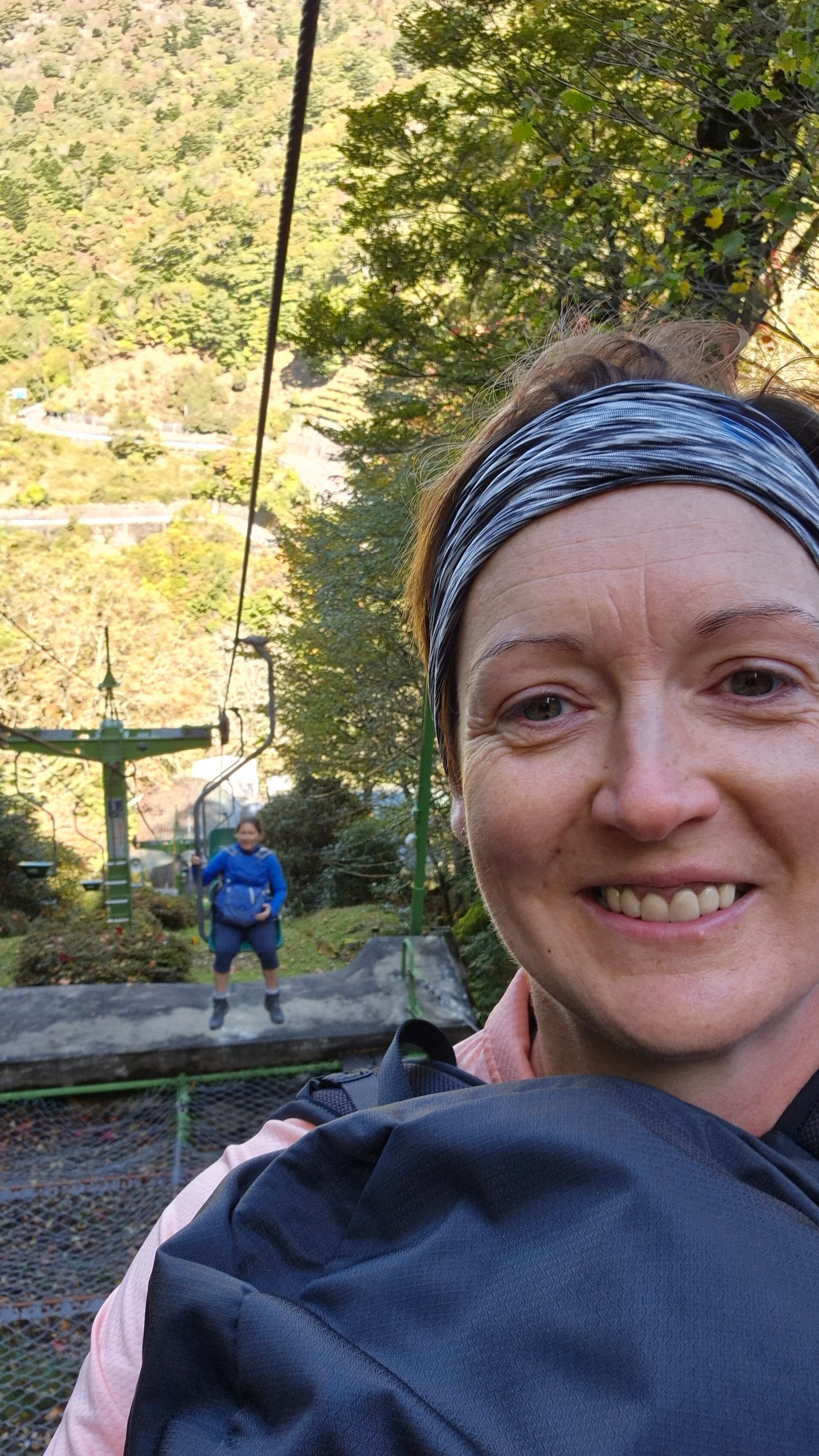
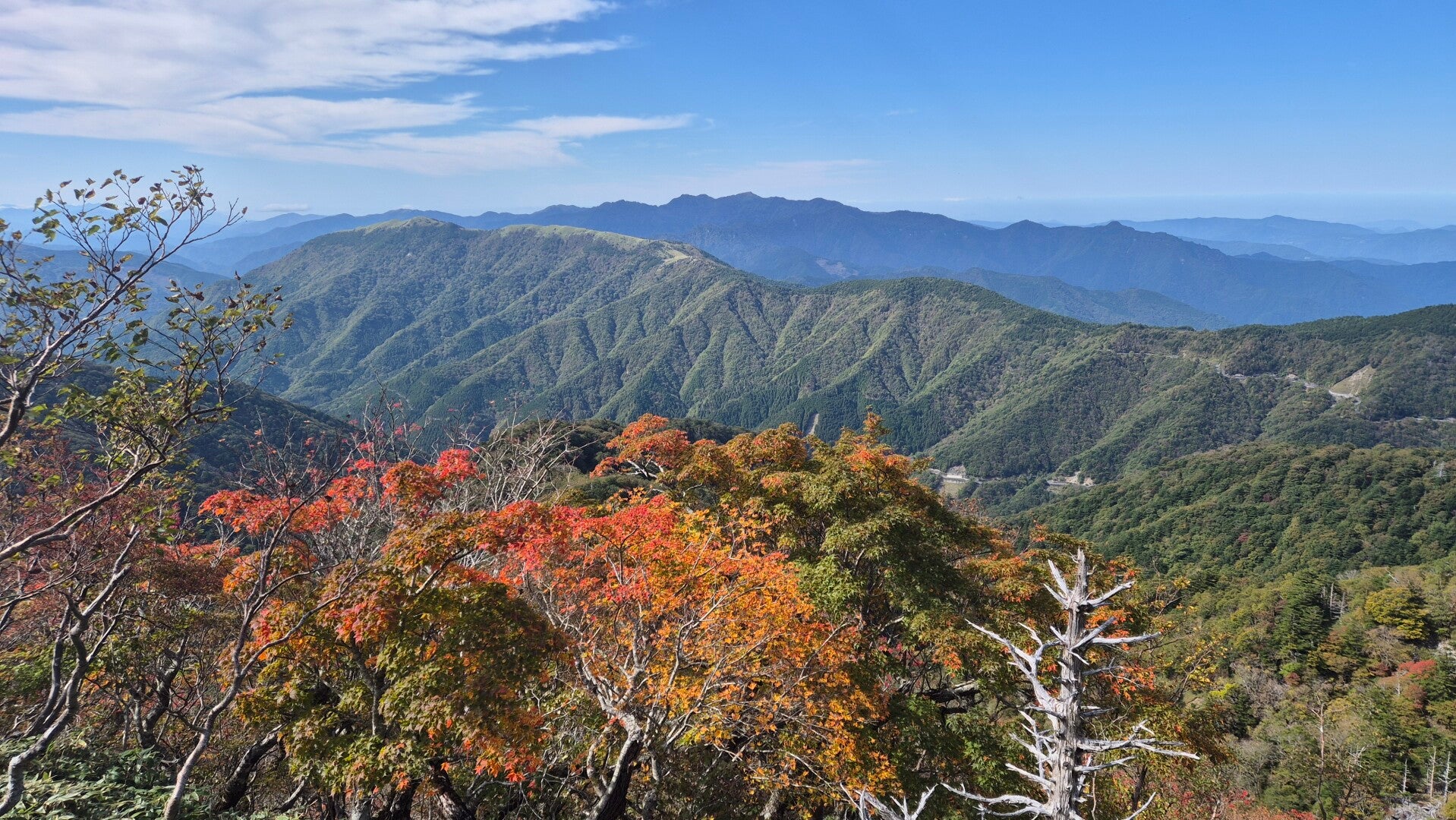
One of our best hikes followed: riding a literal chair lift (bucket seats on a pulley—no seatbelts) to near the summit of Mt Tsurugi, then walking the ridge to Mt Jirogyu. The autumn colours were phenomenal. A good coffee at the lift station rounded things off before we stopped at the ancient “husband & wife” vine bridges.




If You Go: Shikoku & the Iya Valley
- Ritsurin Garden: An absolute must for a low-crowd reset.
- Art Islands: Book museums well in advanced but be prepared for long queues for ferry tickets. Completely avoid on public holidays!.
- Car rental: Remember your International Drivers Licence
Kyushu & Yakushima—Hot Springs, Volcanoes, and Subtropical Wilderness
After dropping the car in Yawatahama, we took the ferry to Beppu. Japanese “economy seating” is unique—no seats, just carpeted sections. We settled into the women’s area and enjoyed the journey.
Beppu is a dated seaside town, reminiscent of Japanese Blackpool. With poor weather, we spent a day in the shopping centre buying Christmas gifts for our nieces and nephew, followed by an hour in the post office organising parcels. We visited the famous “hells”—steaming sulphur pools—stopping for a wee foot bath at the bright blue and red ones.
Hiring another car, we headed south through beautiful landscapes to Kurokawa Onsen. Sanga Ryokan was a standout stay—secluded forest setting, six hot spring baths, traditional room, and the joy of wearing yukata, socks, and slippers around the property. A mysterious “slipper fairy” kept reorganising guests’ footwear, each pair labelled in kanji so we often had to hunt for ours.
Meals were kaiseki-style, which we’d grown used to, though raw egg, fish, and natto for breakfast were still a stretch. We also never adapted to the bean-bag-like pillows. Ouch!
Despite constant rain, we enjoyed hours in the baths and finally made progress planning Southeast Asia. We took a day trip to Mount Aso for hiking—otherworldly, almost lunar. We caught decent views before cloud rolled in and enjoyed jam pieces made with pillowy Japanese bread at the summit.
Further south, Kirishima National Park offered lush forests and great hikes. We climbed Mt Karakuni via the breathtaking Onami Lake, circling the crater as clouds drifted in and out. The final ascent was steep with sketchy stairs, but the views were worth it. Another hike took us to Mt Takachiho-no-mine, said to be where the gods descended to earth and the birthplace of Japan. The red and black rock formations with views over Kagoshima Bay were spectacular.
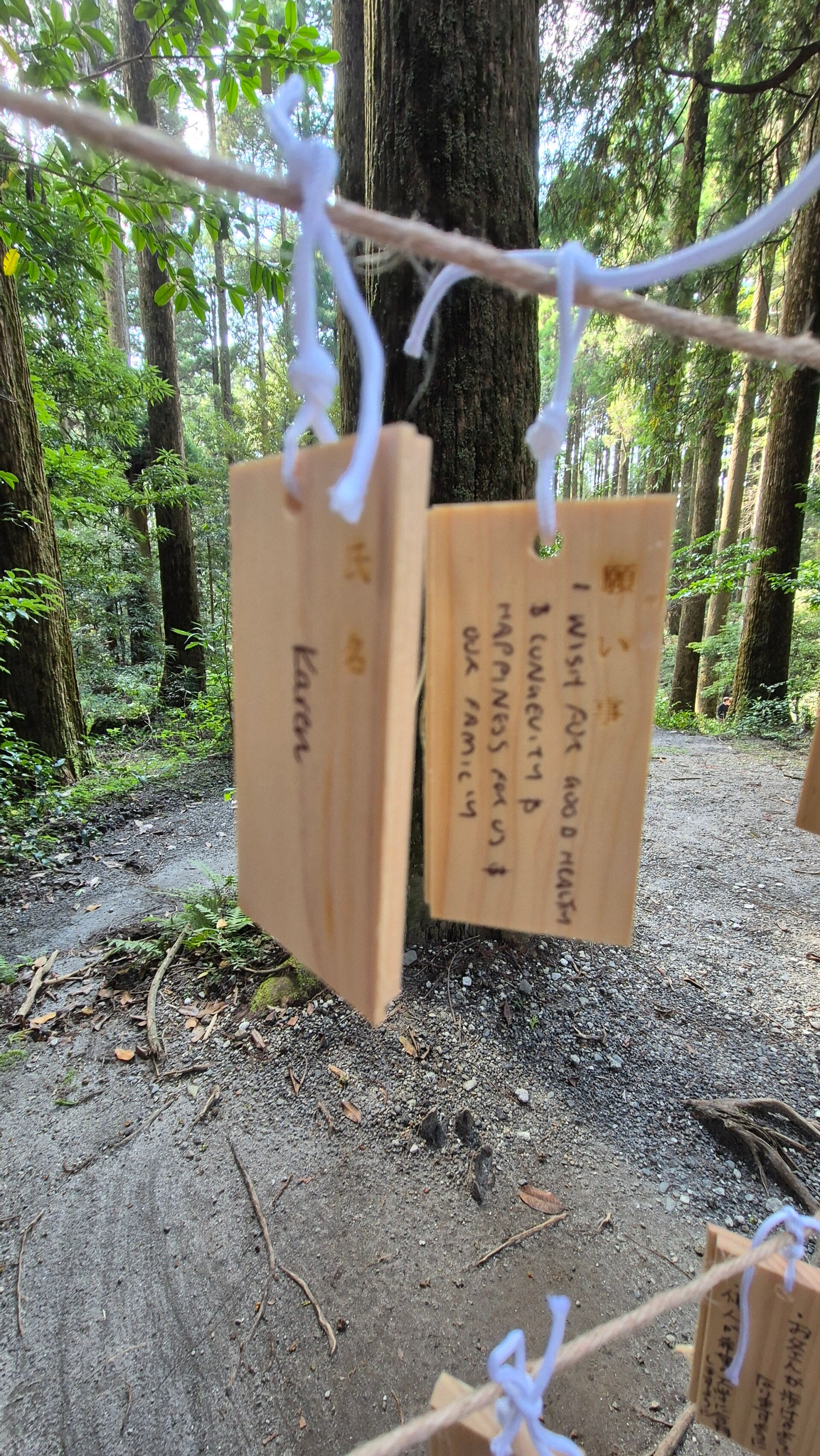
Before leaving, we explored a deserted gorge and visited Kirishima Jingu Shrine. Unlike Kyoto, visitors here showed patience and respect. We then found a small forest shrine dedicated to the mountains—peaceful and spiritual. We left a wish on a wooden plaque, following the example of previous visitors.
Next was Kagoshima—with views of Sakurajima volcano and city bustle. Food fatigue hit here again, especially as we were expecting a western breakfast buffet which wasn’t the case. On our walk to the Seganen Garden we stumbled upon a cute beach side café serving excellent iced coffees, tuna sandwiches and huge fluffy pancakes. They were also playing chilled dance music whereas everywhere else we’d been played questionable jazz. Contentment achieved (it really doesn’t take much).
A jetfoil ferry brought us to Yakushima, a UNESCO island famed for cedar forests and wildlife. This was our 4th and final island on our Japanese adventure.
At Shiki No Yado Onoaida, we enjoyed open-air baths and simple breakfasts with mountain views. Locals say it rains 35 days a month here, but we were lucky with a couple of sunny days. When the hosts upgraded us to a small self-catering cabin with sea and mountain views, something clicked. We loved it so much we abandoned our hiking plan just to sit quietly with coffee. We realised what makes us content: nature, open views, the ability to cook, and—ideally—a soft pillow.
We carved our own chopsticks from local cedar, a lovely activity in the rain. We hiked through the mystical Shiratani Ravine, with moss-covered forests and viewpoints, though our rushed start made it less relaxing. Lunch was delayed because eating isn’t allowed in the moss forest or on the viewpoint rock.
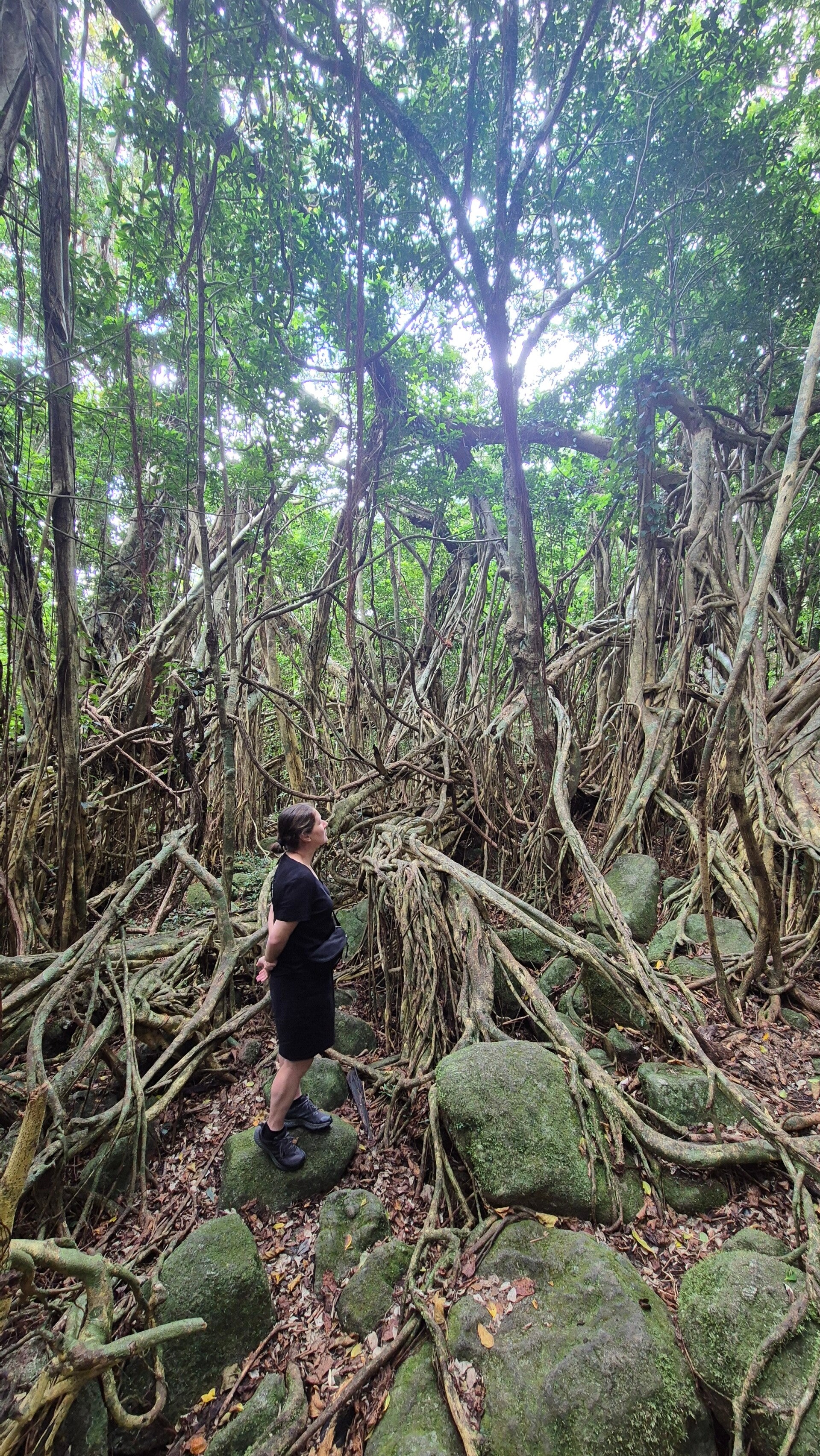
We circled the island by car, stopping at banyan forests, a cave shrine through a torii gate, deserted turtle beaches, and roads shared with monkeys and deer. Sadly, we didn’t witness the famous monkey-riding-deer phenomenon. Our final evening was spent at a local festival—no idea what was happening, but the sunset and children’s lanterns were lovely.
An epic sunrise on our final morning made it hard to leave. After two months, we’d finally found the place where we felt most content even if they do blast Edelweiss across the island’s tannoy system at 6am EVERY morning.
A final shinkansen to Fukuoka provided a rapid return to city life before our flight to Hanoi.
We loved so much about Japan, but we weren’t as utterly entranced as many travellers seem to be. We’ve analysed this to death — and no doubt will keep doing so as we compare it with our time in Southeast Asia. Japan is a wonderful country with so much to offer, but it didn’t always feel easy to travel in. Everything needs to be booked well in advance, opening times must be checked meticulously, contradictory or seemingly non-sensical rules appear everywhere, and being vegetarian is surprisingly hard. But learning all of this — and noticing how you react to it — is part of the glorious experience of global travel. And truthfully, we wouldn’t change it for anything.






If You Go: Kyushu & Yakushima
- Ferries: Embrace "ecomony seating' - its part of the fun.
- Stay at Kurokawa Onsen: the location is simply stunning.
- Allow for downtime: On Yakushima the islands magic is in the slow moments.
Sabbatical Thoughts & Reflections
Despite being on the go for two months, we still found time for reflection—both big-picture and personal.
1. Time feels completely different.
Without corporate structure—meetings, deadlines, long weeks punctuated by short weekends—time becomes abstract. We rarely know what day it is, and even months feel blurred without familiar weather patterns.
2. Traveller’s guilt is real.
Feeling like you “should” be appreciating every moment can be exhausting. I should love this food. I should love this attraction. But it’s okay not to feel how social media tells you to feel. It’s your journey, and it’s okay to stick with what truly makes you happy.
3. Seeing everything vs experiencing some things.
I’ve been a “tick-box tourist” before, wanting my version of the online photos. But this fuels overtourism and often diminishes the experience. Slow days—without plans—bring the most joy. I want to understand the psychology behind taking endless photos. Why is our reaction to capture rather than simply experience? Back when photos lived in personal albums, the intention was different.
4. We’ve reconfirmed what makes us content.
Yakushima clarified it: we need accommodation with outdoor space & open views, the ability to cook our own food, mountains, trees, beaches, and no crowds. A cool wee coffee shop wouldn’t go a miss either. The quest continues to find our ideal base outside of Scotland but using these parameters will help narrow it down and we’re certain we’ll enjoy the process.
Add comment
Comments